The Heart of PARADOX: Breaking Down the Double VFX Shot
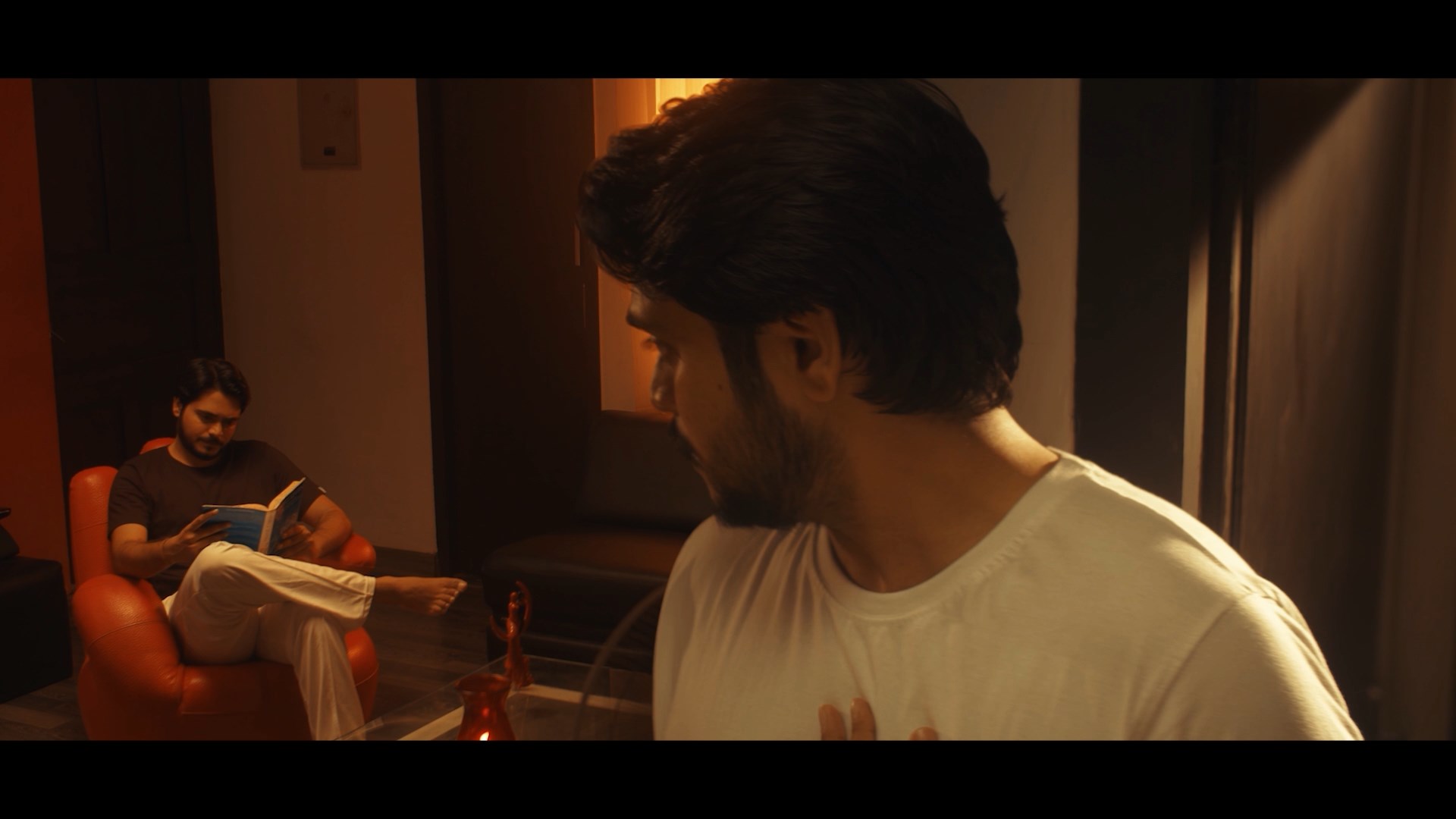
Two versions of the same man share one room — one reading in calm, the other caught in anguish at the foreground. This composite double shot visualises the psychological tension at the centre of PARADOX.
Introduction: The Challenge
The most critical sequence in PARADOX required actor Kalesh Ramanand to appear as two different characters in the same frame: one in the foreground and another in the background. This effect was not a visual gimmick; it was essential to the film's psychological tension, reinforcing the theme of fractured identity and blurred reality. Shooting both performances simultaneously was impossible, so I turned to a carefully planned VFX workflow using a locked-off camera, two separate takes, and frame-by-frame rotoscoping.
The Process: Step-by-Step Breakdown
- 01
Performance & Timing
Kalesh first performed as the foreground character, using rehearsed cues (gestures, pauses, eye-lines) to leave space for his second performance.
- 02
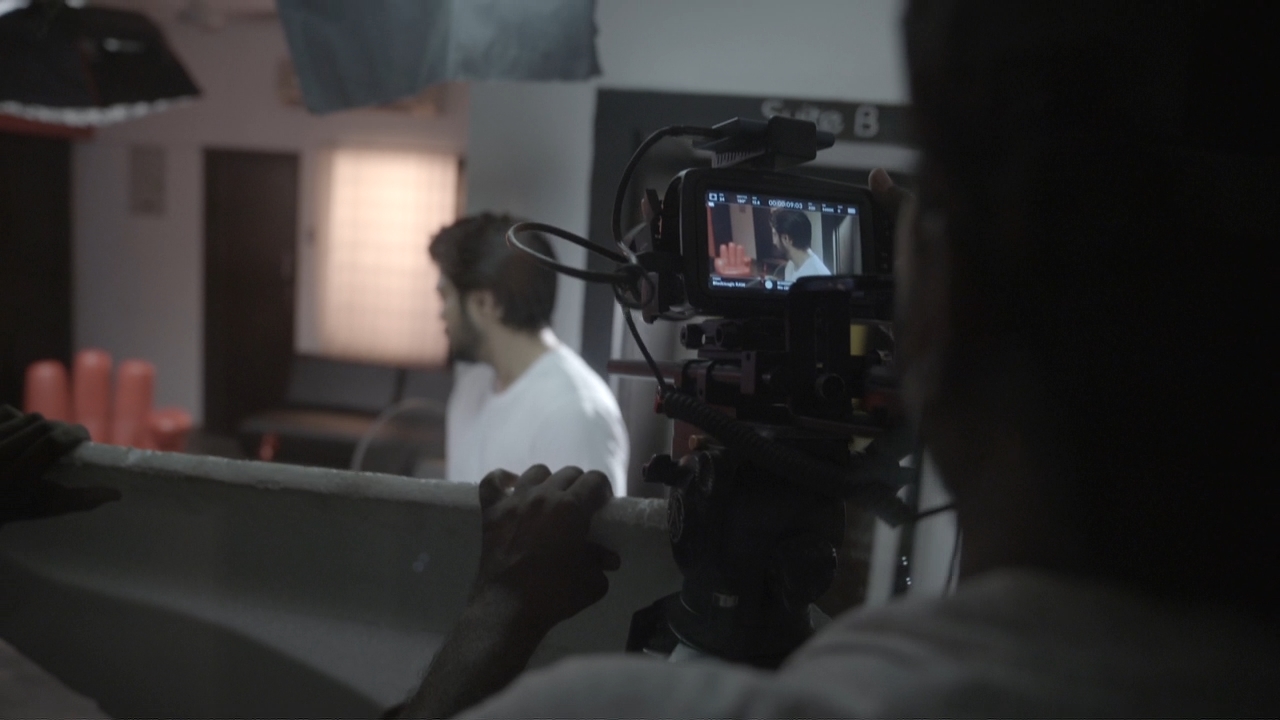
Camera Lock-off
The camera remained on a stationary tripod throughout both takes. This eliminated any movement, ensuring perfect alignment for compositing.
- 03
Second Performance
Kalesh changed costumes and re-entered the scene as the background character, carefully matching the timing and spatial positioning of the first take.
- 04
Rotoscoping & Compositing
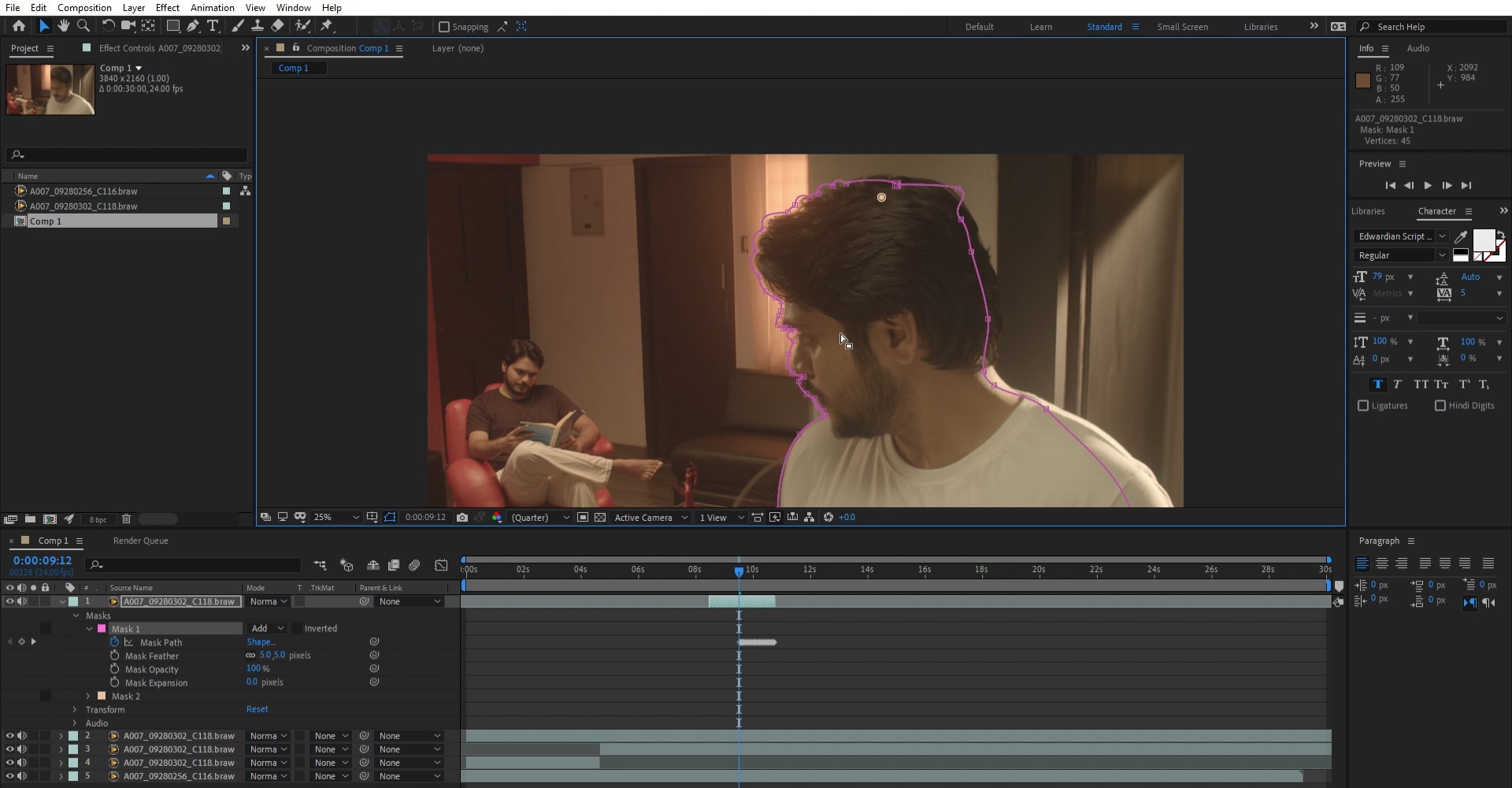
The two shots were stitched together using frame-by-frame rotoscoping. Each frame was manually isolated, cut out, and layered into a single composite. Lighting, edges, and overlaps were refined to make the interaction look natural.
Technical Challenges
Perfect Alignment
Any tiny camera movement or lighting shift would break the illusion. The fixed tripod and consistent lighting were critical.
Frame-by-Frame Precision
Rotoscoping a 10-second shot takes hours. Every frame required careful masking to avoid ghosting or visible seams.
Performance Consistency
Kalesh had to deliver two distinct characters while maintaining spatial and eye-line accuracy. Rehearsals were essential.
What Makes a Shot Like This Work
This shot taught me the value of meticulous pre-production. Even with a simple concept (two characters in one room), execution demanded patience and attention to detail. It also proved that with a locked camera and good planning, a solo actor can convincingly play dual roles without expensive motion control rigs.
The real secret is preparation: rehearsing movements, marking the floor, checking lighting consistency, and budgeting enough time for rotoscoping. When these elements align, the audience never suspects the trick.
Final Result
The finished shot appears as a natural, unbroken interaction between two distinct characters. The audience sees two versions of Kalesh sharing the same space, their movements and eye-lines perfectly synced. This sequence elevated the film's tension and proved that powerful visual effects can be achieved on a micro-budget through clever planning and hard work.